The Significance of Seismic Design in Structural Engineering
Earthquakes cause billions of dollars in damage and countless injuries each year. Discover how seismic design plays a pivotal role in ensuring the safety and resilience of buildings and infrastructure in regions susceptible to earthquakes. Structural engineers employ advanced methodologies to mitigate the impact of seismic forces and protect lives and property.
Key Principles of Seismic Design
- Understanding Seismic Forces: Engineers analyze the seismic hazard of an area to determine the potential ground motion and forces structures may face during an earthquake.
- Building Codes and Regulations: Compliance with stringent building codes and regulations specific to seismic design is crucial to enhance structural integrity.
- Ductility and Redundancy: Designing structures with ductility and redundancy allows them to deform without collapsing under seismic stress, improving overall safety. This ensures that even if one element fails, the structure can still withstand the load.
Techniques Employed by Structural Engineers
- Base Isolation: Utilizing base isolation systems to decouple the building from the ground motion, reducing the transfer of seismic forces.
- Energy Dissipation Devices: Incorporating devices like dampers to absorb and dissipate seismic energy, minimizing structural damage.
- Capacity Design: Ensures that certain structural elements are deliberately designed to yield and dissipate energy in a controlled manner, while other critical components remain elastic and undamaged. Capacity design directs the damage to predefined elements, preventing catastrophic failure. It requires careful detailing to ensure that the ‘damage path’ follows the intended sequence, enhancing overall structural resilience during an earthquake.
Role of Advanced Computer Simulations
Advanced computer simulations and modeling tools, such as Asdea STKO for OpenSees or MonStr System, enable engineers to:
- Predict Structural Behavior: Simulations help predict how structures will respond to seismic forces, including controlling and predicting damage evolution by analyzing the ‘damage path’ under earthquake loading. This ensures that the actual behavior aligns with the capacity design principles.
- Assess Performance: Engineers can assess the performance of buildings under different earthquake scenarios, while monitoring damage progression, refining designs to ensure that damage remains within acceptable limits and critical elements remain protected.
Examples of Advanced Simulation Systems
- Asdea STKO: Known for its robust finite element analysis capabilities, Asdea STKO aids in simulating complex structural behavior under seismic loads, including detailed tracking of damage evolution.
- MonStr System: This system offers advanced modeling features for seismic analysis, facilitating the design of earthquake-resistant structures by allowing engineers to visualize and control the damage path in real time.
Modern seismic engineering increasingly relies on powerful simulation platforms to predict and control structural behavior during earthquakes.
Spotlight on Asdea STKO and MonStr System
| Feature | Asdea STKO | MonStr System |
| Core Functionality | Advanced GUI for OpenSees with pre/post-processing, CAD modeling, and Python scripting | Advanced seismic monitoring and analysis for safety assessment |
| Damage Path Tracking | Visualizes, analyzes, and verifies the evolution of damage paths under seismic loading | Enables real-time monitoring and control of damage progression in simulations |
| Customization | Python API for custom modeling tools, parametric studies, and AI integration | Flexible monitoring options for a wide range of seismic scenarios |
| Scalability | Supports large-scale models with millions of degrees of freedom and parallel processing | Designed for complex structures and detailed performance assessment |
| Visualization | Generates impactful charts, plots, and animations for comprehensive result interpretation | Offers advanced visualization of damage evolution and structural response |
By integrating these principles, engineering techniques, and advanced simulation tools like Asdea STKO for OpenSees and MonStr System, structural engineers can design and verify earthquake-resistant structures with accuracy. These technologies not only predict structural performance but also allow for real-time control and verification of damage evolution, ensuring that structures can withstand seismic events, safeguarding lives and property in high-risk regions.
Contact us to discover how Asdea STKO and MonStr System can enhance your seismic design capabilities:
Related Articles
STKO 4.0.0: Transforming Structural Analysis with Powerful New Features
STKO 4.0.0: Boost Accuracy and Efficiency in Structural Analysis with New Features.
STKO 4.0.0 revolutionizes structural analysis with advanced features, improved workflows, cohesive zones, and automated mass assignment tools. This update introduces innovative features such as shell-section extrusion, frame-step animation, and custom transformation operators. Additionally, it expands material model capabilities with new options like ASDConcrete3D, zeroLengthContactASDimplex, ASDShellT3, ASDCoupledHinge3D, and the uniaxial material ASDConcrete1D.
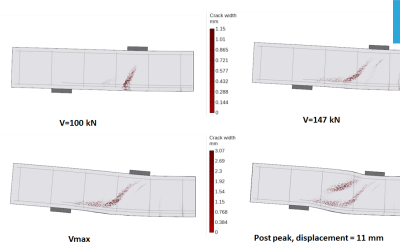
Part 1 – Static: To Linear, or Not to Linear, That Is The Question
PrefaceStructural engineering has relied on linear analysis methods prescribed in design codes for decades to ensure safety and reliability. These methods are well-established, efficient, and familiar but have notable limitations. As designs become more complex,...

Structural Health Monitoring Innovations at WCEE 2024
Discover how our innovative MonStr system and AI-powered DigitalTwinning technology are revolutionizing structural health monitoring. Learn about our recent successes at WCEE 2024 and how we’re making infrastructure safer and more resilient.