In the dynamic world of civil engineering, every decision holds the power to shape a more sustainable future. Here is a list of aspects that civil engineers and architects can evaluate to make more sustainable choices.
Choose sites that minimize disruption to local ecosystems and preserve green spaces.
Consider proximity to public transportation and reduce the need for extensive commuting.

Maximize energy efficiency, natural lighting, and ventilation.
Integrate sustainable materials and construction techniques to reduce environmental impact.
Incorporate energy-efficient systems like LED lighting, smart controls, and renewable energy sources.
Utilize energy modeling tools to optimize the building’s energy performance.
Minimize waste through careful planning, recycling, and reusing materials.
Partner with waste management services that prioritize recycling and responsible disposal.
✅ Lifecycle Analysis:
Assess the environmental impact of materials and designs over their entire lifecycle.
Optimize designs for durability, adaptability, and potential for future reuse.
✅ Green Certifications:
Pursue certifications like LEED, BREEAM, or equivalent, which validate green building practices.
These certifications align with sustainability benchmarks and contribute to environmental stewardship.


✅ Engage Stakeholders:
Collaborate with clients, architects, and contractors to align on sustainable goals.
Foster a culture of sustainability across all project phases.

✅ Educate and Advocate:
Educate your team and clients about the benefits of green building practices.
Advocate for sustainable solutions that balance economic, environmental, and social factors.
By integrating these principles into civil engineering projects, we contribute to a more resilient, sustainable, and harmonious built environment.
To learn more about how we incorporate these options into our projects, head to our website asdea.net.
Related Articles

Civic Tower of Ravenna – Blending Ancient Techniques with Modern Technology
Discover how ASDEA’s MonStr Hardware protects the Civic Tower of Ravenna through smart structural health monitoring. Learn how modern technology and ancient craftsmanship combine for proactive heritage preservation.

The Importance of Seismic Design in Structural Engineering- Ensuring Safety in High-Risk Regions
Seismic design is essential for earthquake resilience. This blog explores key structural engineering principles, advanced techniques like capacity design, and the role of advanced simulation tools such as Asdea STKO for OpenSees and MonStr System in predicting and controlling damage evolution to ensure safer, more durable structures in high-risk regions.
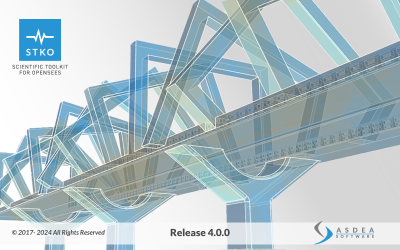
STKO 4.0.0: Transforming Structural Analysis with Powerful New Features
STKO 4.0.0: Boost Accuracy and Efficiency in Structural Analysis with New Features.
STKO 4.0.0 revolutionizes structural analysis with advanced features, improved workflows, cohesive zones, and automated mass assignment tools. This update introduces innovative features such as shell-section extrusion, frame-step animation, and custom transformation operators. Additionally, it expands material model capabilities with new options like ASDConcrete3D, zeroLengthContactASDimplex, ASDShellT3, ASDCoupledHinge3D, and the uniaxial material ASDConcrete1D.